Municipality of Międzyrzecz
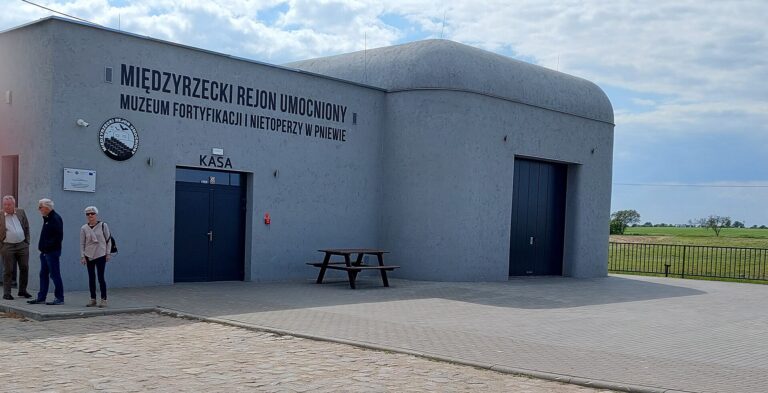
The Museum of Fortifications and Bats in Pniewo — 150 steps down to bunker 717
Guided MRU underground routes: from the Panzerwerk 717 bunker to the underground railway station
Read more →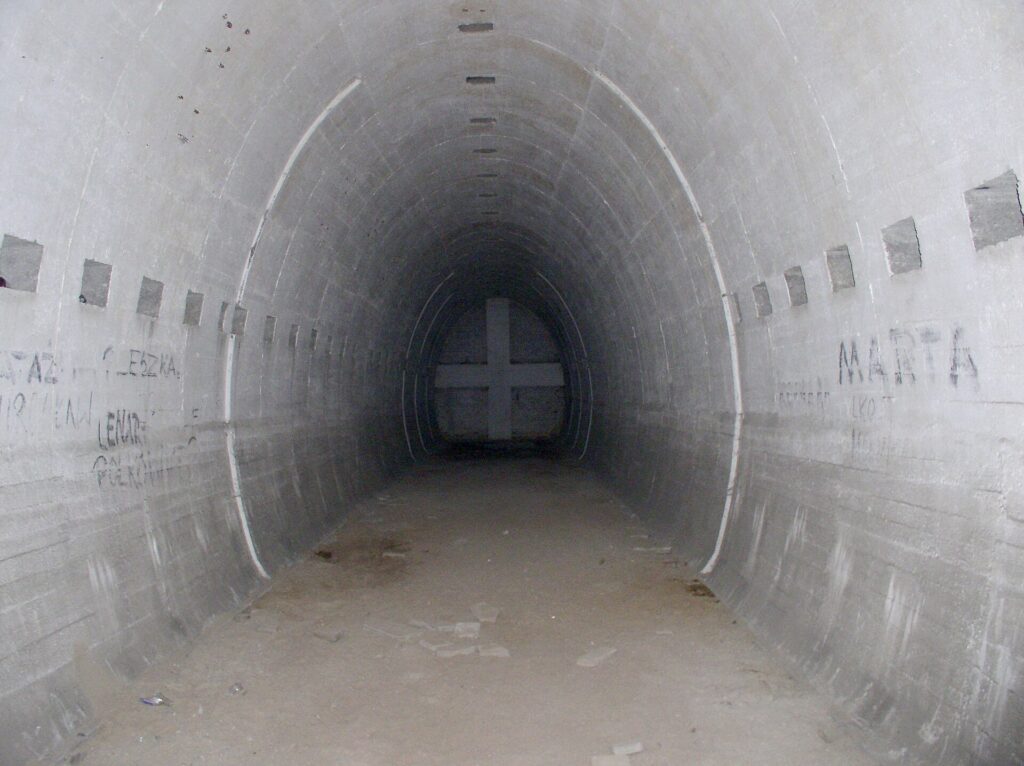
MRU tunnels taken over by bats after the war: 12 species and one of Europe's largest winter roosts
Every winter tens of thousands of bats fly into the concrete corridors beneath the forests between Nietoperek, Kęszyca, Wysoka and Boryszyn — some of them travelling as far as 260 kilometres from Brandenburg and Mecklenburg. According to the Regional Directorate for Environmental Protection in Gorzów Wielkopolski, 39,768 individuals hibernated here in 2025. The "Nietoperek" nature reserve is made up of the tunnels of the Międzyrzecz Fortified Region, abandoned after the war.
The hibernation site was discovered in 1974 by biology students from Adam Mickiewicz University in Poznań, among them Zbigniew Urbańczyk, Elżbieta Bagrowska-Urbańczyk and Wiesław Bogdanowicz; they began systematic research a year later. The first reserve, covering 2.5 ha, was created in 1980 in the central part of the tunnels. In 1998 the Nietoperek II reserve was established, covering the fortress plots and structures of almost the entire central section, and in 2002 the two were merged. Today the reserve covers 50.77 ha in Międzyrzecz and Lubrza municipalities and is part of the "Nietoperek" Natura 2000 site of more than 7,377 ha.
The corridors lie 35–50 metres underground, and the temperature and humidity in them are constant all year round. According to the Directorate, it is these conditions that allow the bats to hibernate undisturbed. Twelve species have been recorded here in winter, including the greater mouse-eared bat, Natterer's bat, Bechstein's bat, the pond bat, the western barbastelle and the brown long-eared bat. According to Wikipedia, it is the largest bat hibernation site in Central Europe and the largest in Poland for the greater mouse-eared, pond and Bechstein's bats. Bats use the tunnels in summer as well, although they matter most to them in winter.
The count takes place every January. In 2026 it was the 25th international count, coordinated by Dr Tomasz Kokurewicz of the Wrocław University of Environmental and Life Sciences. According to the Directorate, the number of bats has been stable since 2021 despite climate change; the 2025 result was 8.5% higher than in 2024, when 36,653 individuals were counted.
You cannot enter the reserve on your own. Do not go into bunkers or tunnels outside the guided tourist routes. This is a nature reserve with 5.77 ha under strict protection, and the tunnels shelter protected animals. From 15 October to 15 April entry to most of the MRU's underground corridors and bunkers is prohibited, and guided routes are shortened.
You can legally see part of the tunnels with a guide from the Museum of Fortifications and Bats in Pniewo (Międzyrzecz municipality) or on the Boryszyn Loop (Lubrza municipality). The longest routes are available between 16 April and 14 October. It is about 10°C underground, so bring warmer clothes. The reserve has no route or point of its own worth driving to, so we do not give coordinates; the starting point is the museum in Pniewo.
Guided MRU underground routes: from the Panzerwerk 717 bunker to the underground railway station
Read more →