In Chludowo near Poznań, a 2.5-kilometre stretch holds three different stories. There is the larch-wood All Saints' Church of 1736, built by the Cistercian nuns of Owińska. There is the park where Roman Dmowski lived. And there is a small museum devoted to the Divine Word missionary Fr Marian Żelazek, who survived Dachau and Gusen and then spent decades helping people with leprosy in India.
The nuns' larch-wood church
Chludowo is one of the oldest villages in the area. According to Wikipedia, from 1248 or 1250 it belonged to the Cistercian convent in Owińska, granted by Dukes Przemysł I and Bolesław the Pious. The Suchy Las municipality guide links the first mention of the village with a document on the arrival of the nuns in Owińska in 1252.
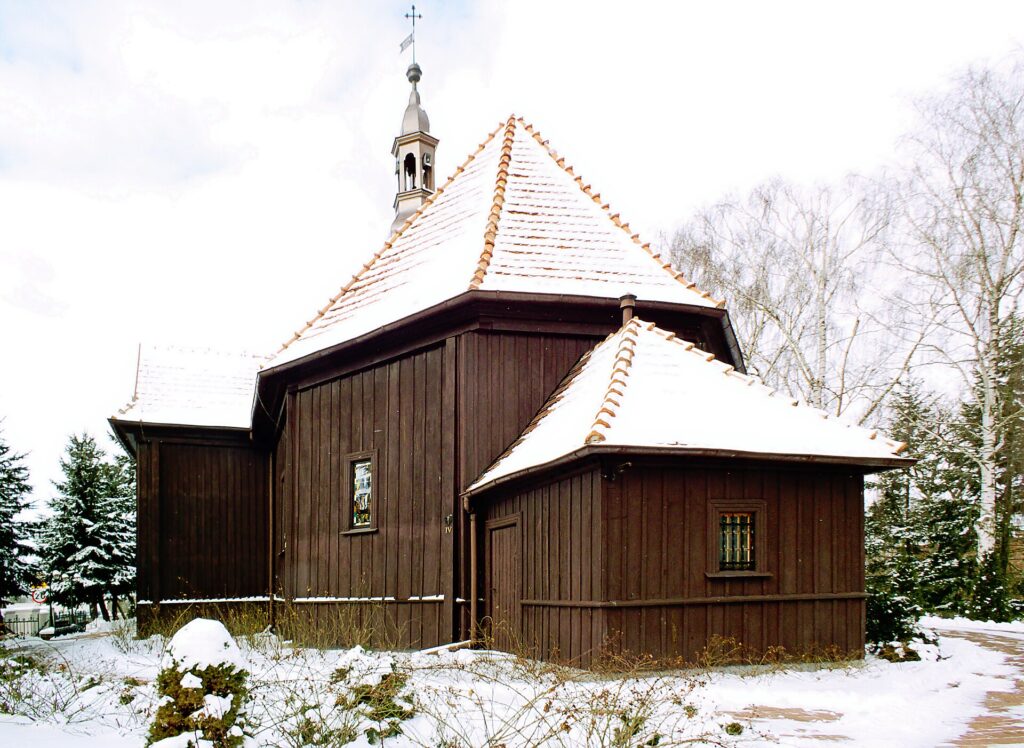
The first church, which according to the guide the nuns built at the turn of the 13th and 14th centuries, burned down in 1710. In 1736 the nuns put up a new church of larch wood, blessed in 1744 by Bishop Józef Kierski. It is an aisleless church with two side chapels forming a transept and a single tower. Among the items saved from the fire was a painting of the Virgin and Child, which Wikipedia dates to the 16th century and describes as painted on a limewood panel. The church keeps its old furnishings, including a Passion group on the rood beam.
From 1771 to 1926 the church was a chapel of ease of the Cistercian church in Owińska. Since 1945 it has been in the care of the Divine Word Missionaries. In 1968–1970 it underwent a thorough renovation, with new ceilings and roof. The bell tower was built in 1936 as a votive offering for the church's 200th anniversary, and in December 2008 the tower was renovated and the building floodlit. The church is on the heritage register under number 2397/A of 21 December 1932.
The von Treskow park and Roman Dmowski
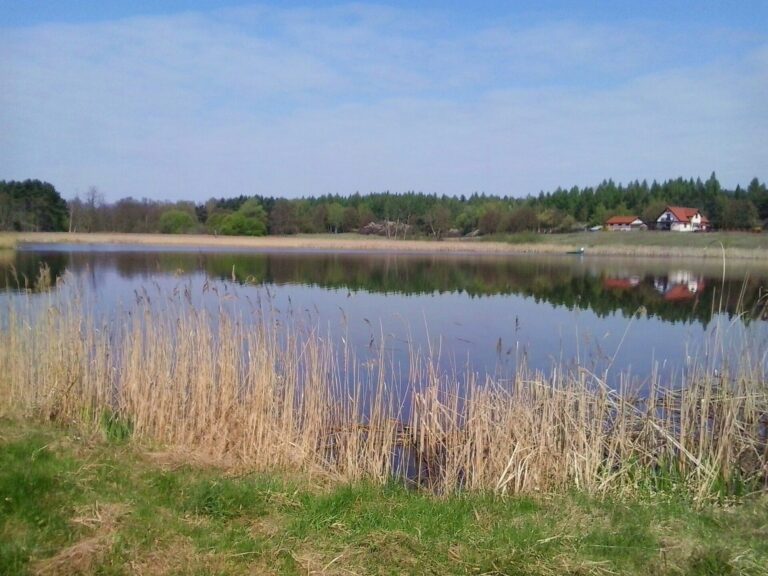
In 1797 the Prussians confiscated the convent's estates, and Chludowo passed for more than a century to the von Treskow family. Around 1820–1830 they laid out a park. Today it has a pond, a grotto with a statue of the Virgin Mary and more than 700 old trees, and in 1985 it was entered in the heritage register. A Neoclassical palace was built around 1863. In 1909 the Treskows sold the whole estate to the Prussian Settlement Commission, which brought German settlers here. A building now called the Old Bar (Stary Bar) was built for them, with a hall and stage, a restaurant, a shop and guest rooms. Since spring 2021 it has housed a branch of the municipal Culture Centre and Library.
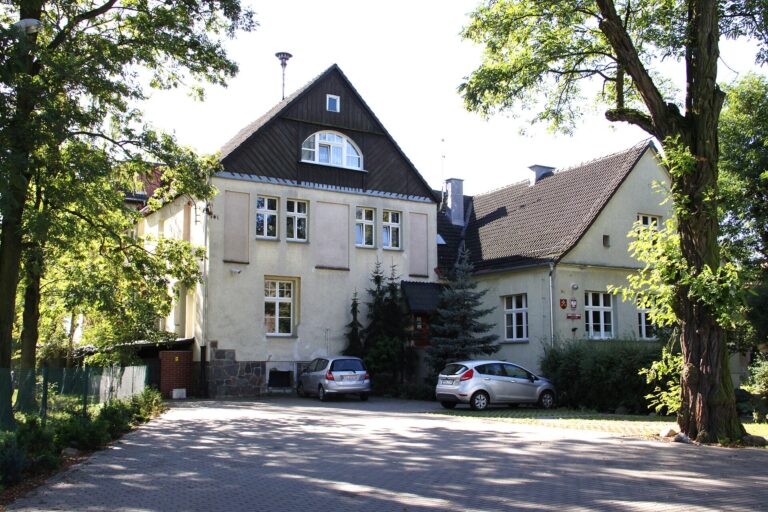
After Poland regained independence, the estate was divided up. In 1922 Roman Dmowski bought the palace with the remaining land and, according to the municipality guide, lived here until 1934. The guide also says that in 1927, on his initiative, a People's Reading Rooms Society library was opened, probably in the former school building of 1911, which now houses a branch library. A bust of Dmowski stands at the park entrance. In 1934 the palace was taken over by the Divine Word Missionaries, who opened a novitiate in 1935; their seminary operated here from 1936 to 1948, before moving to Pieniężno. The palace burned down in 1948 and looks completely different after rebuilding. Today it houses the Mission House of St Stanislaus Kostka.
The Fr Marian Żelazek Museum
In the missionaries' park there is a small museum devoted to Fr Marian Żelazek. During the Second World War he went through the Dachau and Mauthausen-Gusen camps. According to the municipality guide, he promised then that if he survived, he would devote the rest of his life to the sick and needy. For years he worked in India, caring for people with leprosy in Puri. His motto was “it is not hard to be good, you just have to want to”. The display cases hold his personal belongings and objects brought from India. Since 15 June 2002 the school in Chludowo has borne his name.
The second part of the exhibition is devoted to the Baroque music of the South American Indians, discovered and studied by another Divine Word missionary from Chludowo, Fr Prof. Piotr Nawrot. There are original Indian instruments and a model of a Jesuit reduction, a settlement of Indians run by the Jesuits. The municipality guide compares them to the setting of the film “The Mission”.
Practical information
Chludowo is in Suchy Las municipality (Poznań County), on the Poznań–Piła railway line (Chludowo halt). The municipality guide suggests a 2.5-kilometre walk from the car park by the school and library (ul. Szkolna 3): the missionaries' park (ul. Kościelna 15), the museum, the houses on ul. Rynek, the former school, the Old Bar and the church (ul. Kościelna 4). The museum can only be visited with a guide by prior telephone appointment (tel. +48 61 811 65 50, as of 2022). According to the guide, the church can be entered after Mass. Allow 1.5–2 hours in total.