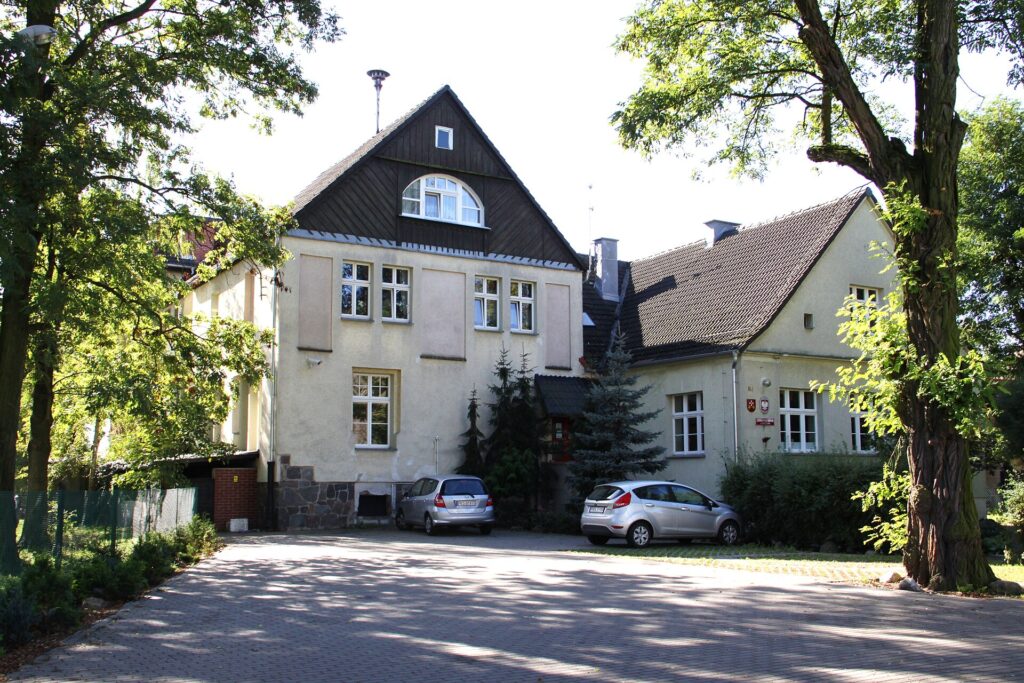
If you get off the train at Golęczewo near Poznań, you arrive in a village that for over a decade was a Prussian showcase project. In 1901 the Prussian state bought the local estate and, in place of a Polish village, built the German “model village” of Golenhofen. It had running water, a community house with a clock tower, the “Golden Star” inn and houses in the styles of various German regions. Many of them still stand.
A village built for the European press
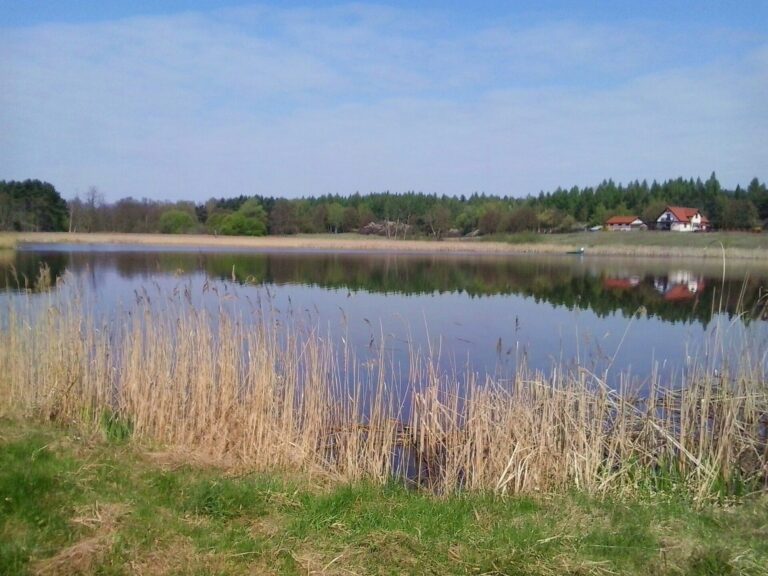
Golęczewo is old. The first written record dates from 1313, and archaeological research shows a settlement existed here as early as the 11th–13th centuries. In 2013 the village celebrated its 700th anniversary, commemorated by two boulders by the pond on ul. Tysiąclecia. After the Second Partition in 1793, Golęczewo became part of Prussia.
In October 1901 the Royal Prussian Settlement Commission bought the local estate of 623 ha at auction for 530,000 marks. According to Wikipedia, the aim was to create a model German village. The Suchy Las municipality guide and the goleczewo.com website link the decision with Kaiser Wilhelm II, although the website cautiously says it was “reportedly” his decision. The whole layout and individual buildings were designed by Paul Fischer, the Commission's chief architect. In 1902–1905, 41 farms of 2.5 to 20 ha were laid out. Houses could be bought only by German Protestants from outside the Posen region. Settlers came from Silesia, Baden, Saxony and Hanover, and even from Hungary, Russia and America. In 1906 the village was renamed Golenhofen.
Golenhofen was a showpiece. On 20 August 1904 a railway station built specially for the new village was opened. Trains brought tours of journalists and dignitaries, and Wikipedia lists their dates: 24 May 1909, 6 June 1910 and September 1913. The village was covered by the German and foreign press, including the French “Le Figaro” in 1907. Orłowicz's guidebook of 1913 also lists Golęczewo among the sights around Poznań.
Houses in German colours and water from a windmill
The latest technical innovations were used. The houses had running water, pumped into the water supply by a wind-driven pump, and the village had storm drains. The buildings were half-timbered and painted in colours echoing the German flag: black, white and red. Each house was given its own character, drawing on the architecture of a different German region, and some façades bore proverbs in Gothic lettering. The house next to the school resembles the Lusatian weavers' houses with their distinctive posts: the upper part rested on separate posts so that it was not shaken by the looms working below.
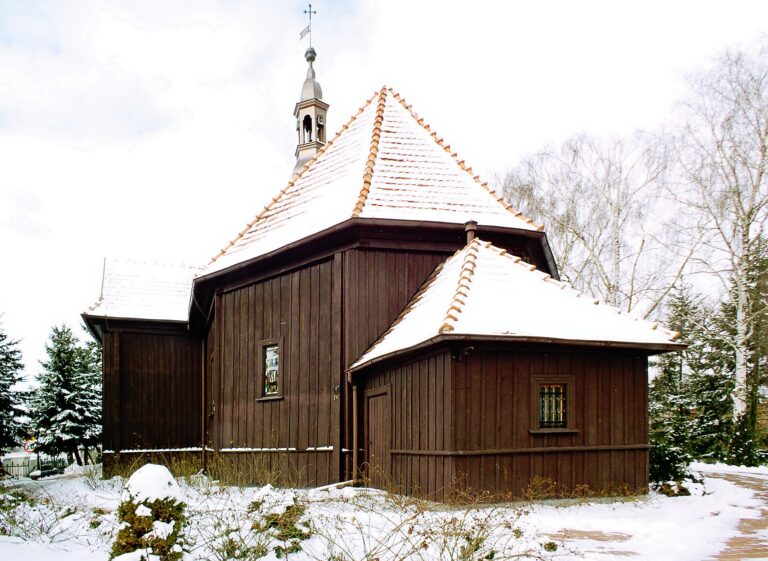
The village was meant to be self-sufficient. In the centre stood a community house with a school, a prayer hall and a clock tower; the school opened in the autumn of 1905. In front of it was an ornamental well with a little roof, into which goldfish were released in summer for luck. Its outline can still be seen in the paving of the school car park. Opposite was the “Zum Goldenen Stern” (Golden Star) inn with a wine bar and rooms for travellers. There was also a building with a bread oven that also heated the water for the baths and laundry, with the fire station next door.
The end of the experiment and a statue hidden under beehives
The experiment lasted less than two decades. After Poland regained independence, most of the settlers sold their farms to Poles and left for Germany, and Golęczewo became an ordinary village. In 1928, on the 10th anniversary of independence, a statue of the Virgin Mary was erected in the centre of the village. During the Second World War the Germans knocked it down, but Polish families hid it under beehives in one of the apiaries. After the war it returned to its place. Every year on 11 November, residents from across the municipality gather there to celebrate Independence Day.
Practical information
Golęczewo is in Suchy Las municipality (Poznań County), on railway line 354 Poznań–Piła. You can get here by train to Golęczewo halt or by buses 905 and 907 from Poznań. The municipality guide suggests a walk of about 2 km. It starts at the station (ul. Dworcowa 21) and follows Dworcowa, Wodna and Tysiąclecia streets past the pond, the former inn, the baths, the statue and the community house, returning along ul. Lipowa. Information plaques stand by the most interesting buildings. There is also a free self-guided treasure trail (quest) called “Golęczewo – wieś wzorcowa”. An hour is enough for the walk. The houses are private, so view them from the street.