Municipality of Międzyrzecz
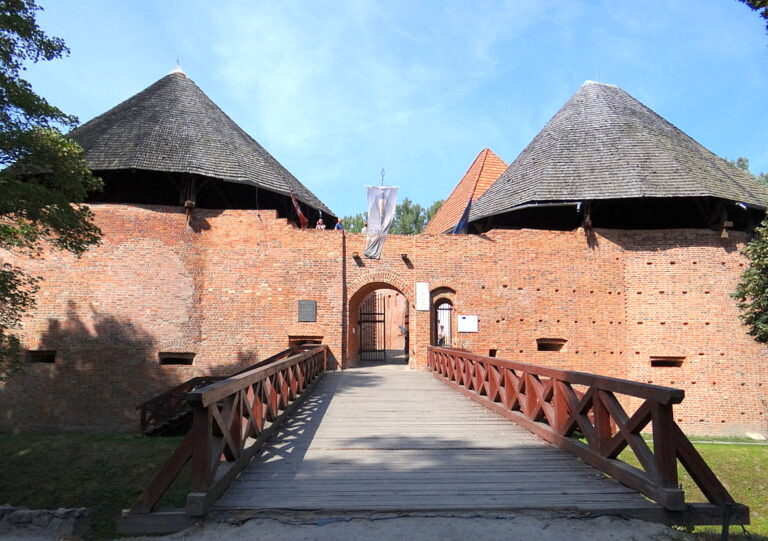
Międzyrzecz Castle — Casimir the Great's border fortress and the coffin portraits
Ruins of a 14th-century royal castle, the starostas' manor and a museum with 220 coffin portraits and plaques
Read more →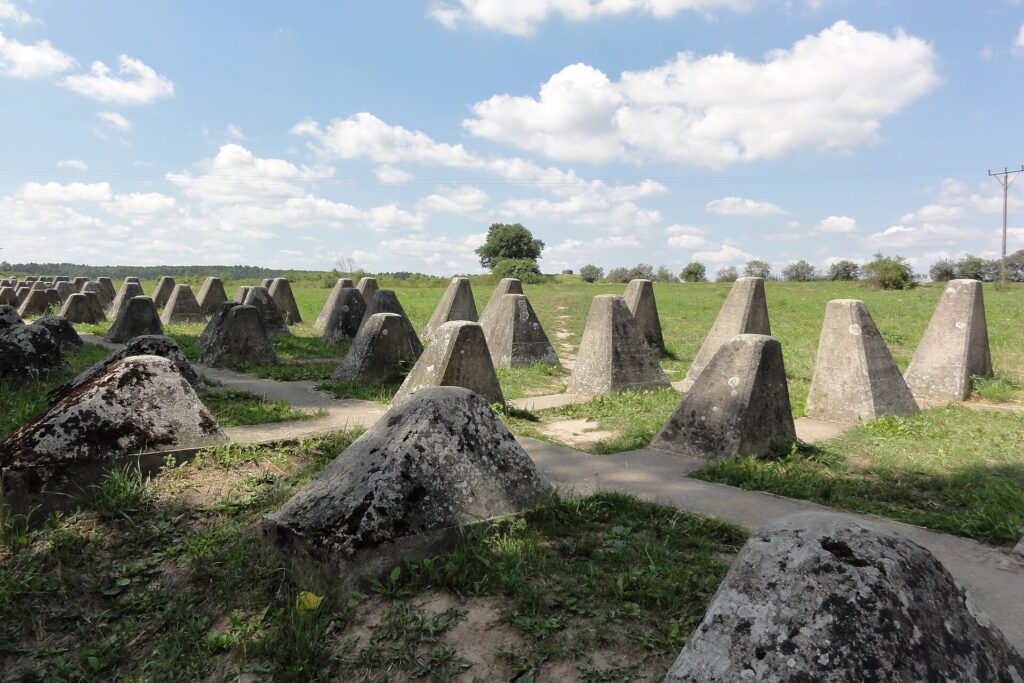
More than 30 km of 1930s underground corridors, underground railway stations and a winter roost for nearly 40,000 bats
In the fields between Pniewo and Kęszyca, rows of concrete "dragon's teeth" stick out of the ground, with the odd armoured bunker cupola among them. But the real Międzyrzecz Fortified Region lies underneath: an estimated 32–35 kilometres of tunnels dug 20–50 metres below ground, with underground railway stations and barracks. The Germans built it in the 1930s to close the shortest route from Poland to Berlin.
The Treaty of Versailles banned Germany from building fortifications near its borders. According to Wikipedia, preparations secretly began as early as 1927. After the Allied control commission was dissolved and Hitler came to power, the first works started in spring 1934: canals were dug between lakes, weirs and dams were built, and small shelters went up by the roads. In 1935 General Otto Förster presented a plan to fully fortify the so-called Lubusz Gate, and Hitler approved it on 30 October 1935 during a visit to a bunker construction site in Wysoka.
The whole Oder-Warthe Bend fortified front (Festungsfront Oder-Warthe-Bogen) was more than 80 kilometres long and had three sections. The central one — around Boryszyn, Wysoka, Kęszyca and Międzyrzecz — was the most heavily fortified, because it had no lakes or rivers to protect it. The combat bunkers, called Panzerwerke, were linked by an underground Main Traffic Route. The tunnels had an egg-shaped cross-section that better withstands the pressure of the earth; railway tracks ran in the floor with drainage beneath, and 18 underground stations were built along the corridors.
In 1938 Hitler halted construction, and work finally stopped in mid-1939. The original plans were never completed; the bunkers lacked, above all, anti-tank weapons and artillery. From 1943 the tunnels housed a repair line for Daimler-Benz aircraft engines, worked by forced labourers, mainly Poles and Soviet prisoners of war.
In the winter of 1945 the fortifications were manned by small, poorly trained garrisons. The Red Army broke through the line in three days of fighting, 29–31 January 1945. After the war many structures were blown up to recover their armour steel, and in the 1980s there were even plans to store radioactive waste in the tunnels.
Instead, the tunnels were taken over by bats. The hibernation site was discovered in 1974 by biology students from Adam Mickiewicz University in Poznań. Today the central section is the "Nietoperek" nature reserve. During the 2025 count, the Regional Directorate for Environmental Protection in Gorzów Wielkopolski recorded 39,768 hibernating bats here.
The central section of the MRU lies in Międzyrzecz municipality, Międzyrzecz County, Lubusz Voivodeship, about 10–15 km south-west of Międzyrzecz. The tunnels can only be entered with a guide. In Międzyrzecz municipality, tours are run by the Museum of Fortifications and Bats in Pniewo, which has its own entry on this site. The second underground route, the so-called Boryszyn Loop, starts near Boryszyn in the neighbouring Lubrza municipality.
The temperature underground is about 10°C all year round, so bring a warm jacket even in summer. From 15 October to 15 April the protection period for hibernating bats applies and most corridors are closed. Do not enter bunkers or tunnels outside the designated routes: this is a nature reserve, and the abandoned structures are not made safe for visitors. You can see the concrete barriers and bunker cupolas from outside by the museum in Pniewo.
Ruins of a 14th-century royal castle, the starostas' manor and a museum with 220 coffin portraits and plaques
Read more →