Municipality of Międzyrzecz
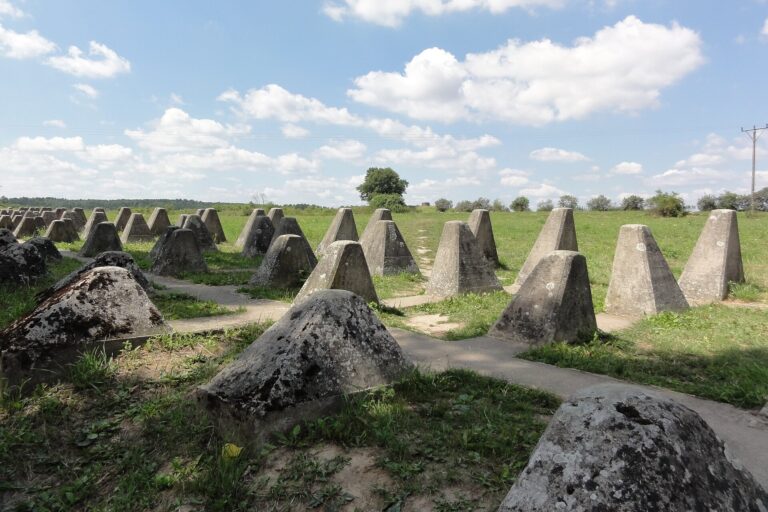
The Międzyrzecz Fortified Region — the tunnels meant to bar the road to Berlin
More than 30 km of 1930s underground corridors, underground railway stations and a winter roost for nearly 40,000 bats
Read more →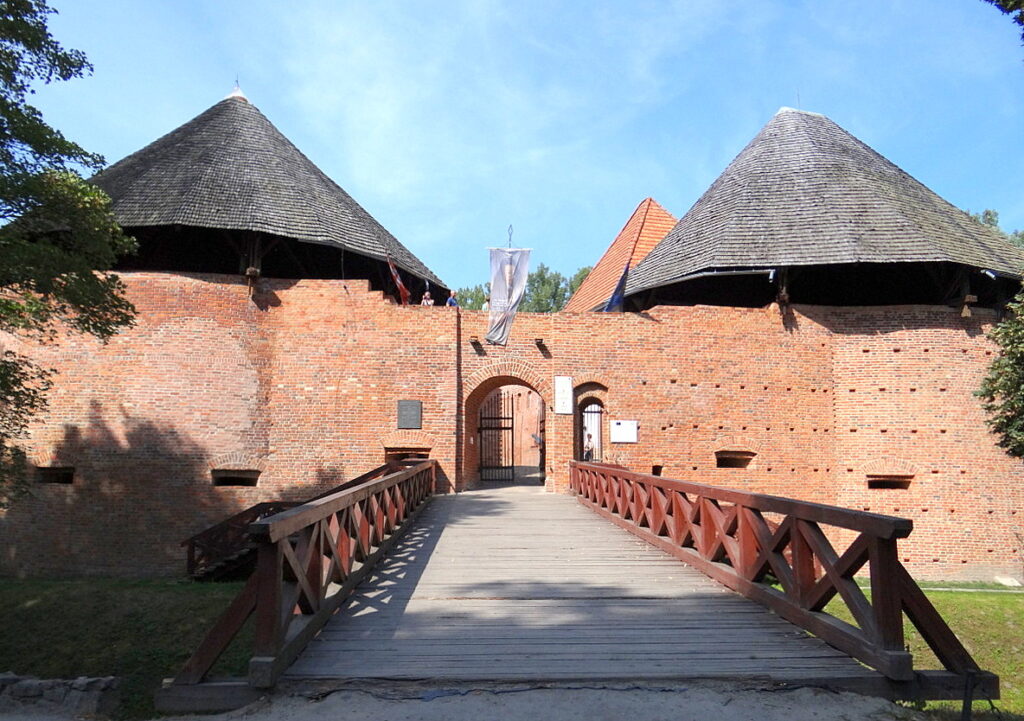
Ruins of a 14th-century royal castle, the starostas' manor and a museum with 220 coffin portraits and plaques
Between the Obra and Paklica rivers, on a mound people were fortifying as early as the 9th century, stand the brick walls of Casimir the Great's castle, with the Baroque manor house of the starostas next to it. The museum in the manor holds something you would not expect in a small county town: according to the museum, it is the largest collection in Poland of coffin portraits, inscription plaques and heraldic plaques, numbering 220 objects.
The hill at the fork of the rivers was first occupied by a wooden Slavic stronghold. Archaeologists found storage pits in it for about 250 tonnes of grain — far more than the Międzyrzecz area alone could produce — which is why the stronghold is regarded as a base for Piast expeditions to Pomerania. Gallus Anonymus described how in 1094 Bolesław III Wrymouth forced its garrison to surrender after a few days of assault. Excavations in the 1950s uncovered an almost complete skeleton of a warrior killed in the fighting for the stronghold, with an arrowhead still between his ribs.
Construction of the brick castle began around 1350 on the orders of Casimir the Great. The curtain walls form a horseshoe 145 metres long and still survive to a height of about 9 metres. The castle guarded the Kingdom's western border, yet it fell many times. In 1474 the troops of Matthias Corvinus took it through treachery, and in 1520 mercenaries supporting the Teutonic Order stormed it. After that attack two round artillery bastions with walls 3.5 metres thick were added by 1574. In 1574 Henry of Valois stayed here on his way from France to Kraków to take the Polish throne.
After the Swedish Deluge and the Great Northern War the castle was no longer fit to be a residence. In 1719 the starostas built a manor house beside it, and it is there, together with an outbuilding from the early 18th century, that the Alf Kowalski Museum of the Międzyrzecz Land operates today. After 1945 the whole complex was handed over to the museum, and in the 1950s and 1960s the castle was preserved as a permanent ruin; only the gatehouse and the ground floor of the Renaissance residential building were rebuilt. In November 2024 the castle with its manor and park complex was declared a Monument of History.
The museum's collection numbers more than 18,000 objects. Its 17th- and 18th-century coffin portraits have been shown at exhibitions in places including Paris, London, Rome and Berlin. The ethnographic display includes the local Międzyrzecz folk costume and a reconstructed "white room" of a local cottage from the turn of the 20th century. The surrounding park covers almost 6 hectares, and an avenue of plane trees runs along the former anti-artillery rampart.
Międzyrzecz municipality, Międzyrzecz County, Lubusz Voivodeship. The museum is at ul. Podzamcze 2, a few minutes' walk from the market square; the visitor car park is entered from ul. Zachodnia.
Important: on 1 October 2026 the museum announced that the castle is temporarily closed to visitors because of renovation work. The castle interiors and courtyard are inaccessible, and the museum will announce when it reopens. The exhibition in the manor house is open.
Opening hours according to the museum's website (as of October 2026): 1 May – 31 October, Tuesday–Friday 9:00–16:00, Saturday–Sunday 10:00–17:00; 1 January – 30 April, Tuesday–Friday 9:00–16:00, Sunday 10:00–17:00, closed on Saturdays. The museum is closed on Mondays, and admission to the museum is free on Tuesdays. Last entry 45 minutes before closing. A standard museum ticket costs PLN 15, reduced PLN 10. Check the latest announcement on the museum's website before you travel. Allow about 1.5–2 hours for the exhibition and the park.
More than 30 km of 1930s underground corridors, underground railway stations and a winter roost for nearly 40,000 bats
Read more →