Municipality of Śliwice
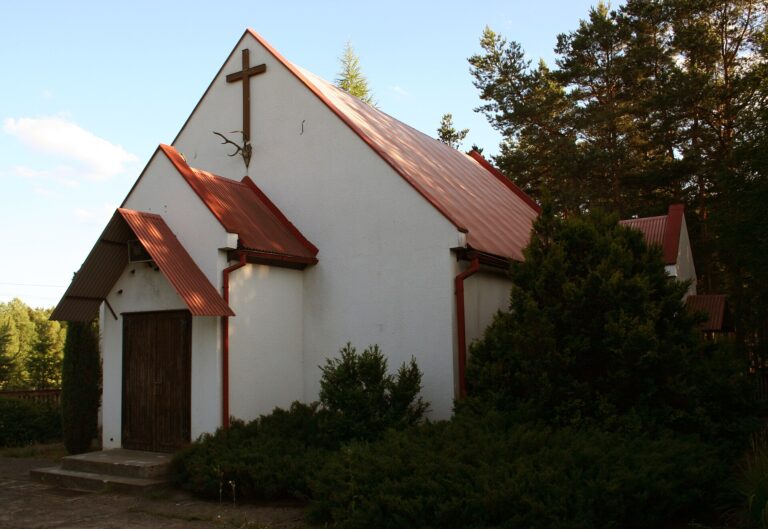
St Hubert's Chapel in Okoniny — sanctuary of the patron of hunters and of the whole municipality
A chapel with antlers on its gable, relics of St Hubert and a November hunters' feast.
Read more →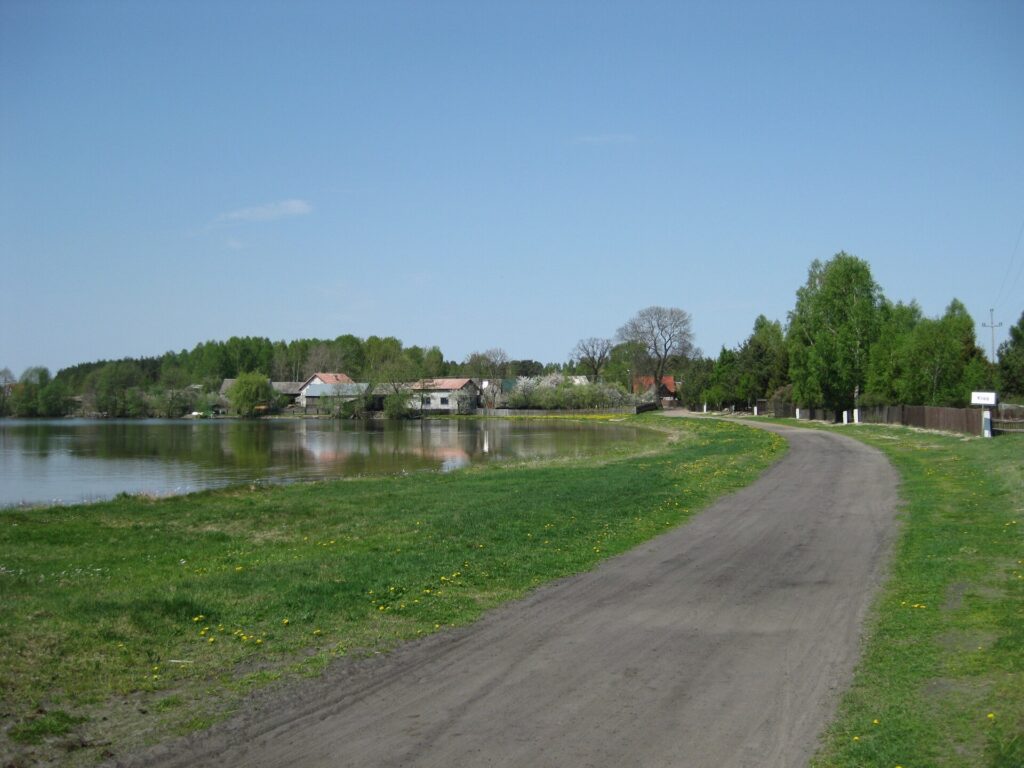
A village on an isthmus between lakes, where most houses are old cottages of pine logs.
Krąg lies on a narrow isthmus between two lakes, Okrągłe and Długie, in the Tuchola Landscape Park. A dirt road runs through a village where most houses are old cottages of pine logs — a few of them still thatched. The Tuchola Landscape Park calls Krąg "a kind of living open-air museum".
In the days of the Polish nobles' republic the settlement belonged to the Świecie starosty, and in 1875 it became part of the newly created Tuchola County as part of the Lipowa manorial estate. The village lies on a strip of land between Lake Okrągłe (107 ha) and Lake Długie (64 ha), among the largest lakes in Śliwice municipality. Until 1923 its inhabitants belonged to the parish in Śliwice, later to the new parish in Szlachta. Records from 1765 mention a Jakub Górnowicz here, and in 1865 no fewer than 16 of the 32 families in the village bore that surname.
According to a description prepared under the National Rural Network programme, the village has 15 timber houses, with several more plastered or bricked over in later years. About a third of them are roughly 200 years old. The cottages are of log construction — built from resinous pine trunks. There is also a brick former school building from 1911, now housing a village community room. Old household and farm implements from Krąg ended up in museums — you can see them at the Ethnographic Museum in Toruń and the Kashubian Ethnographic Park in Wdzydze Kiszewskie.
Śliwice municipality notes that turning the settlement into an open-air museum was once considered, and in 1993 television broadcast a programme about the village titled "Where Time Stood Still". Krąg has nevertheless remained an ordinary, lived-in village — the number of cottages and thatched roofs changes with renovations, so treat older figures as approximate.
During the occupation the area was a field of operations for partisan groups; the municipality states that one of the main bunkers of Jan Megger's group was near the village, while the Tuchola County guide links that bunker with 2nd Lt Jan Miętki's airborne group. On 2 November 1939 a teacher from Krąg, Alojzy Biesek, was killed in the forest near Rudzki Most.
The school where he taught had been founded in Krąg at the end of the 19th century. The occupation also struck the villagers: on 3 November 1944 the Germans murdered Salomea and Zofia Wielgosz for collaborating with the resistance and helping the partisans. The Tuchola County guide ends its description of the village by calling its compact buildings a “jewel of Borowiak folk architecture”.
Getting there: Krąg, Śliwice municipality, about 8 km north-west of Śliwice; the "Navigate" button takes you to the village centre. Visiting: you see the village from the public road; the cottages are private and lived in — do not enter yards or photograph residents without permission. Time: 30–45 minutes for a walk through the village and down to the lakes. In summer tourist groups come here; off-season it is quieter. The state of the buildings may change — check before you set off.
A chapel with antlers on its gable, relics of St Hubert and a November hunters' feast.
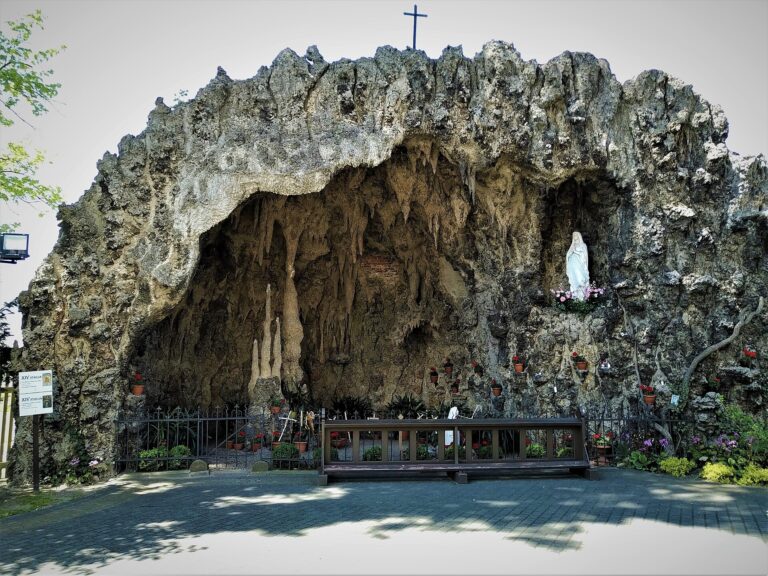
Read more →A grotto cast from slag and cement in 1908, and gravestones made with the same technique.
Read more →