Municipality of Czerwonak
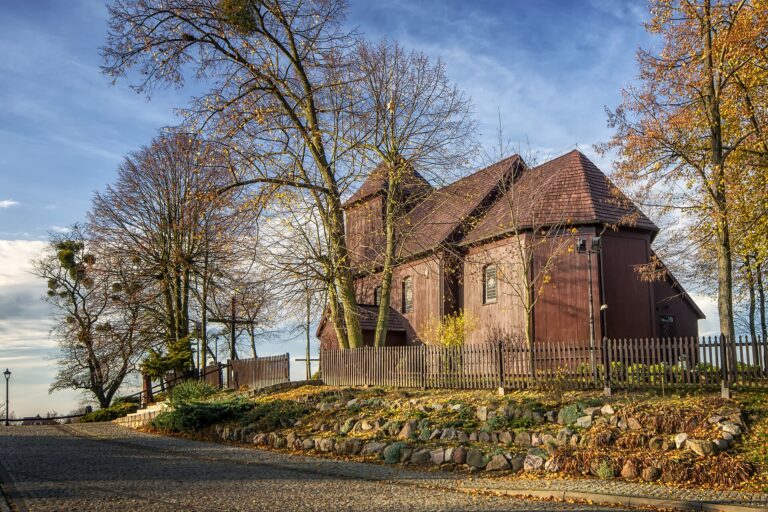
The wooden church in Kicin — Kochanowski's parish, which the poet never visited
A larch-clad church from 1751 and the true story of Jan Kochanowski as parish priest of Kicin.
Read more →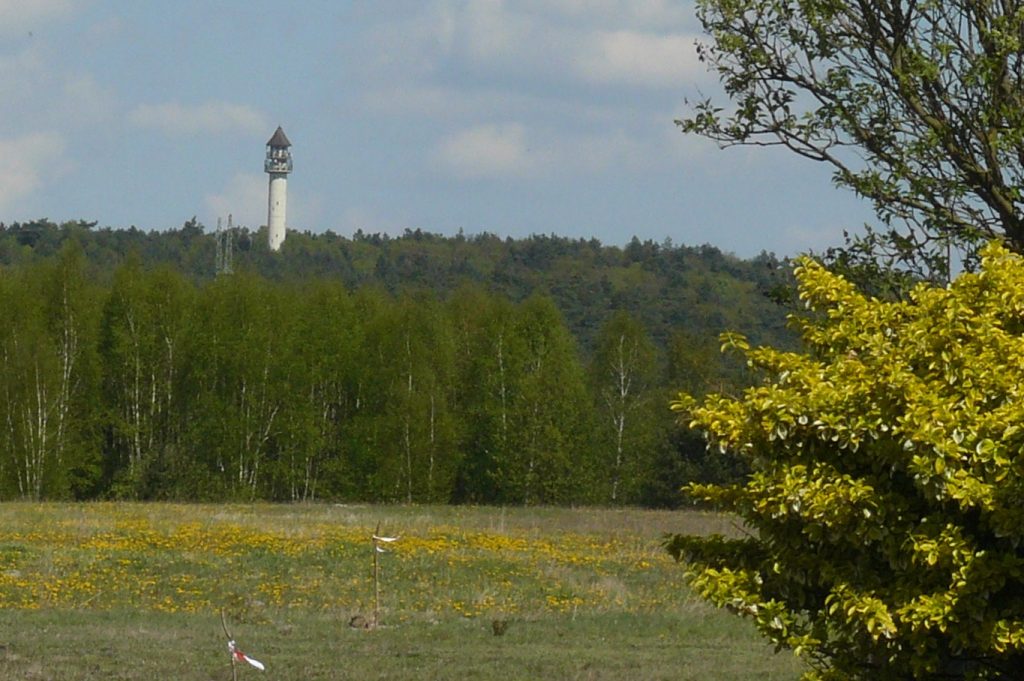
The highest point of the Zielonka Forest — and the key to where the name Czerwonak comes from
Dziewicza Góra (144.9 m above sea level) is the highest point of the Puszcza Zielonka Landscape Park, a dozen or so kilometres north-east of central Poznań, in Czerwonak municipality. On the summit stands a 40-metre fire lookout tower run by the Łopuchówko Forest District, with a viewing terrace 30 metres up from which you can see Poznań. Admission is free, but the tower opens only at set times.
Dziewicza Góra is part of a terminal moraine from the Poznań phase of the last glaciation, a ridge of rock debris left at the front of the ice sheet. The ridge runs for about 400 metres and lies roughly 2–3 km east of the gorge section of the Warta valley. The hill rises about 90 metres above its surroundings, which is why it stands out from afar in flat Greater Poland.
Sources differ on its height. The Łopuchówko Forest District's nature trail guide and Polish Wikipedia give 144.9 m (144.92 m to be exact), while some tourist descriptions and English Wikipedia round it down to 143 m. The guide adds that it is the second-highest hill in the Poznań area.
The slopes are rich in plant life. Wikipedia mentions about 700 species of vascular plants and about 130 species of mosses and liverworts. The hill lies within the Natura 2000 special area of conservation “Uroczyska Puszczy Zielonki”. In early spring the slopes turn purple with flowering hepaticas. They are strictly protected, so do not pick them.
At one stop on the nature trail there is an oak wood, a light, warmth-loving oak forest more than 80 years old. The Forest District guide also lists the animals you may meet: roe deer, red deer, fallow deer and wild boar, and among smaller mammals hares, hedgehogs and squirrels. Amphibians and reptiles include the fire-bellied toad, common toad, common frog and sand lizard.
The hill's old name was Dziewcza Góra, the Maidens' Hill. In German it was called Annaberg. In 1242 Przemysł I, Duke of Poznań, granted the hill to the Cistercian nuns of the convent in Owińska, and the name comes from them. The Forest District guide says the sisters, together with the girls from the convent school, came here for walks lasting several hours. The nature trail even has a stop called “the historic place of the convent”, where tradition says the nuns came to rest from their daily duties.
The hill is also linked with Polish cochineal (Porphyrophora polonica), a small insect associated with a plant called perennial knawel. Its powdered larvae were used to make a carmine dye. In the 15th and 16th centuries it was one of the main exports of Poland and Lithuania, and the oldest record of it being exported dates from 1412. The Polish words for June (czerwiec) and red (czerwony) come from this insect. It could not compete once cheaper cochineal from the Americas reached Europe.
The Forest District guide notes that Polish cochineal has been recorded in the local forests, and legend says the nuns bred it on Dziewicza Góra itself. Wikipedia is more cautious: breeding here is possible and might explain the name of nearby Czerwonak. This is a hypothesis, not a documented fact, but if it were confirmed, a single hill would explain the name of a municipality, a month and a colour.
The tower was built in 2005 by the Łopuchówko Forest District with support from the National Fund for Environmental Protection and Water Management. It is a reinforced-concrete structure on a circular plan, designed by Joanna Giczali-Ochodek and Andrzej Czech and built by MCP Kopuły of Bielsko-Biała. It is first of all a fire lookout. At 33 metres there is an observer's cabin of about 9 m², with instruments for pinpointing a fire and radio links to the Forest District and the fire service.
Visitors go three metres lower, to the terrace at 30 metres. It takes 171 or 172 steps to get there (sources give both figures), and there is no lift. From the top you can see the forests of Puszcza Zielonka and the Poznań skyline. The Forest District guide compares the tower's full 40-metre height to an eleven-storey block of flats.
There is a reason for the tower. In 1992 a fire in Puszcza Zielonka burned 250 hectares of forest. One of the starting points of the nature trail is the “Pożarzysko” (Burnt Ground) stone. According to the “Bliżej nieba” brochure on viewpoints around Poznań, night climbs of the tower are also organised.
The easiest place to start is the car park below Dziewicza Góra. From there the Łopuchówko Forest District's nature and forest trail “Dziewcza Góra” runs in two loops with 19 stops: a long one (5.5 km) and a short one (3.5 km). You can also start from the Forest Classroom (Leśna Klasa) or from the “Pożarzysko” stone. The climb to the summit and up the tower takes 30–45 minutes, and allow 1.5–2 hours with a full loop.
The tower's opening hours depend on the season and the weather. Before you go, call the Łopuchówko Forest District on +48 61 812 20 11 (the number given on regionwielkopolska.pl). The area around the tower and the forest roads are open all year. The tower itself can only be climbed by stairs, and forest paths lead uphill to the summit.
Nearby you will find the wooden church in Kicin and the sights of Owińska: the Cistercian convent that once owned the hill and the Bartek oak.
A larch-clad church from 1751 and the true story of Jan Kochanowski as parish priest of Kicin.
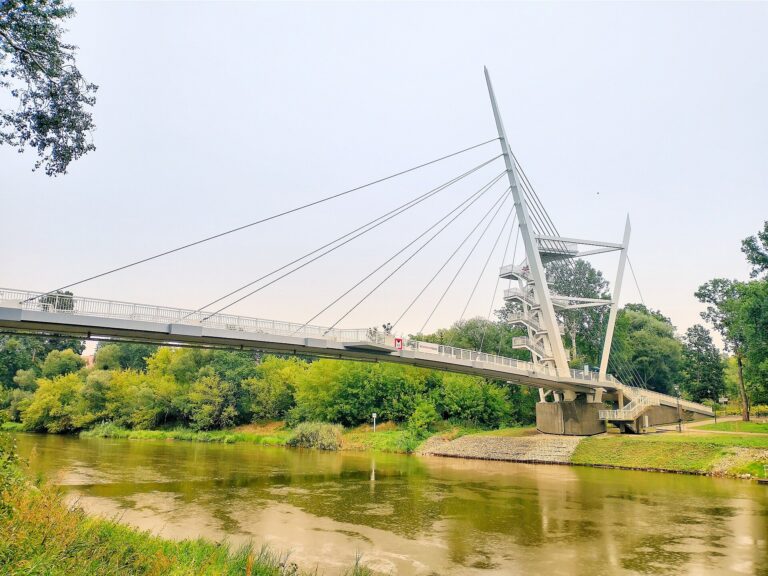
Read more →A footbridge over the Warta with a 25-metre viewing tower, on the site of an old ferry crossing.
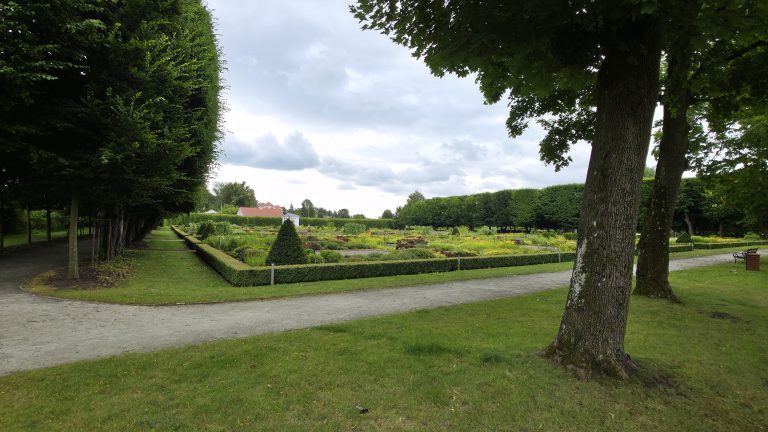
Read more →A park where blind children learn to move around on their own — open to you too
Read more →